Attendee Journey Mapping as Execution Protocol: The Sandbox-XM Five-Phase Framework for Enterprise B2B Events
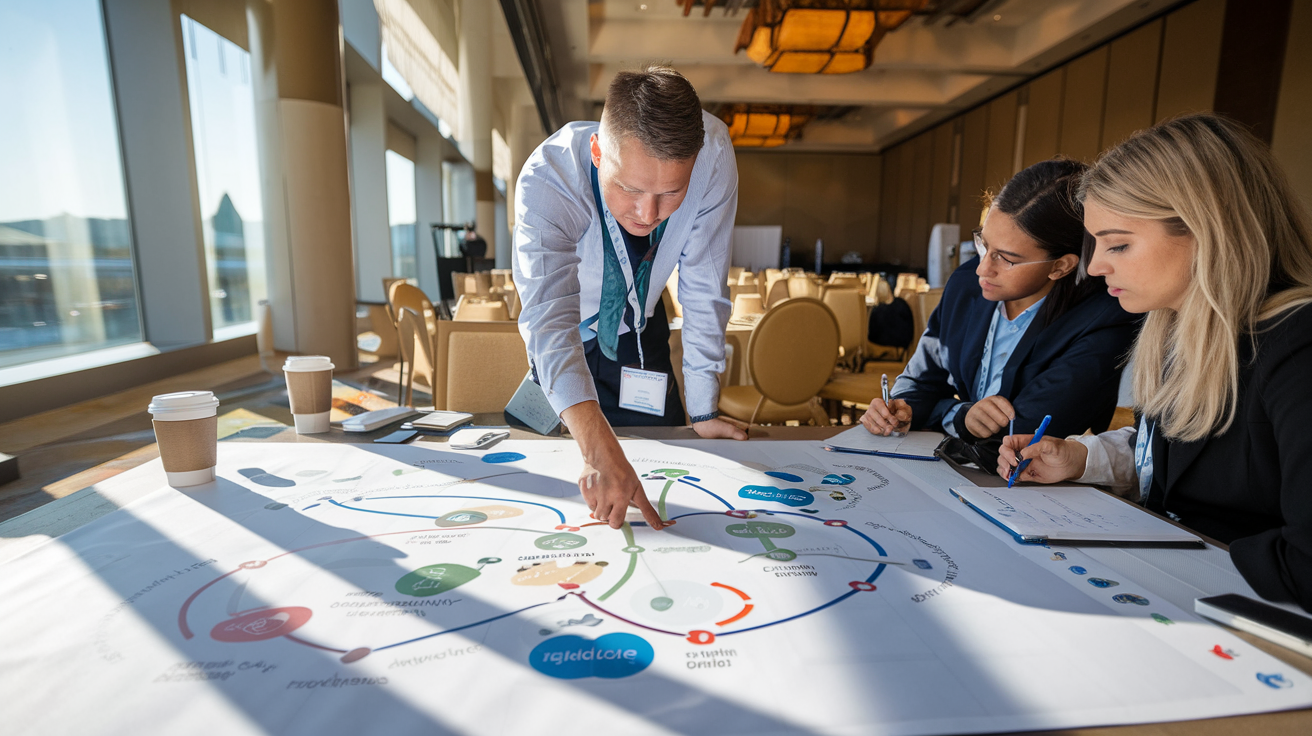
Your CMO wants pipeline attribution from last quarter's flagship event. Your team has attendance numbers, a photo recap, and a slide deck with a journey map that took two days to build in a pre-event workshop. That journey map looked rigorous in the planning review. It had color-coded swimlanes, emotional arc annotations, and at least four sticky-note-derived insights. It had no assigned touchpoint owners. It had no response SLAs. It had no authority on-site.
That is not a journey map. That is decoration.
The distinction matters because the back half of the attendee journey — the part where intent converts to pipeline — operates either on agreements or on assumptions. When it operates on assumptions, attribution collapses. Budget gets questioned. The CRO starts asking whether events are a growth channel or a hospitality expense.
Sandbox-XM's position is direct: attendee journey mapping is a governance document or it is nothing. The Five-Phase Attendee Journey Framework was developed not in a workshop but in production — across enterprise B2B programs where the cost of a handoff gap was a missed quarter, not a missed annotation.
Journey Mapping Is Not a Workshop Deliverable — It Is an Execution Protocol
The industry default is to produce journey maps during the strategy phase and retire them when production begins. Event teams treat them as alignment tools — useful for getting stakeholders to agree on intent, disposable once the venue contract is signed. This is the root cause of most post-event attribution failures.
A journey map without assigned touchpoint ownership is a planning artifact. A journey map without content sequencing authority cannot govern what a guest receives before, during, or after the program. A journey map without response SLAs for each lead tier produces exactly the post-event environment most enterprise event teams live in: a 72-hour window of intent evaporating while the internal debrief is being scheduled.
Sandbox-XM draws a hard distinction. The journey map is the governing document that determines whether the post-event conversion phase — the phase that produces pipeline — runs on agreements or assumptions. When it runs on assumptions, sales teams ignore post-event leads because the handoff process is undefined. Follow-up is generic. Contacts default to whoever the SDR happened to notice in the CRM.
The execution-protocol model changes the operational question from 'did guests enjoy the experience?' to 'did every touchpoint owner know their trigger, their content, and their SLA?' That is the question that produces attribution data. That is the question a CMO can take to the board.
The Sandbox-XM Five-Phase Attendee Journey Framework
The Sandbox-XM Five-Phase Attendee Journey Framework is a named execution protocol, not a generic planning model. Each phase maps a guest's emotional and intent state to a specific set of operational responsibilities. Gaps between phases are handoff points — and every unmanaged handoff is where pipeline leaks.
**Phase 1 — Awareness and Anticipation**
This phase governs how a prospective attendee forms their intent posture toward the program before they register or confirm attendance. It maps to Sandbox-XM's Digital and Media and Experience Strategy service lines. The operational decisions locked in this phase include pre-event microsite architecture, on-brand digital touchpoint sequencing, and audience segmentation signals that will govern on-site personalization. Most programs skip this phase entirely and call registration confirmation the starting line. It is not.
**Phase 2 — Arrival and Orientation**
The guest's first physical and contextual signals on-site determine whether the emotional contract set in Phase 1 is honored or broken. Arrival sequencing, badging experience, initial hospitality touchpoints, and room orientation are not aesthetic decisions — they are trust signals. Operations and Delivery governs this phase. The question is not 'does it look good?' but 'does the guest feel taken care of, not just informed?'
**Phase 3 — Engagement and Momentum**
This phase sequences content and hospitality to sustain attention and generate signal moments — the discrete on-site touchpoints where intent data is captured without disrupting the guest experience. Signal moments include room transitions, session attendance patterns, catering pause configurations, and breakout groupings. Every room transition is either a signal captured or a signal lost. Event Technology and Measurement governs signal instrumentation in this phase. Technology selection follows journey design — not the reverse.
**Phase 4 — Transition and Close**
This phase governs how the program concludes, what commitments are surfaced, and which guests are tier-documented before they leave the building. The closing session architecture, executive availability, and departure hospitality are not ceremony — they are the final structured data collection opportunity before the post-event window opens. Contacts not tier-documented in real time default to Tier 3 until evidence is produced. That rule is not punitive; it is the only enforcement mechanism that prevents optimistic retroactive tiering from inflating pipeline projections.
**Phase 5 — Post-Event Conversion**
This phase translates captured signals into pipeline within the 48-to-72-hour intent window. It maps to Sandbox-XM's Event-led Growth service line. Structural components include recap content architecture, follow-up content tiering by lead tier, and pipeline signal translation into CRM-actionable language. The 48-to-72-hour window is a hard operational constraint. After it closes, guest intent decays, competing programs capture attention, and the attribution baseline begins to degrade.
Pre-Event: Where Journey Design Actually Begins
The industry default is to treat pre-event communication as logistics email. Save-the-dates. Agenda reminders. Hotel block confirmations. These communications are sent, checked off a project management list, and forgotten. They are also the first moment guests form an intent posture toward the program — a posture that is measurable, designable, and consequential.
The Awareness and Anticipation phase is where journey design actually begins. Before a guest enters the room, they have already decided how much cognitive and commercial attention they are willing to invest. That decision is made through the cumulative quality of every pre-event digital touchpoint: the microsite architecture, the content sequencing logic, the registration experience, the agenda reveal cadence.
Operationalizing this phase requires locking a set of decisions before any creative or logistics work begins:
- **Pre-event microsite architecture**: What is the value hierarchy the site communicates? What audience segments receive differentiated content paths? What actions are the site's conversion goals?
- **On-brand digital touchpoint sequencing**: In what order does a prospective attendee receive communications? What is the emotional arc of the pre-event sequence, and does it mirror the on-site experience arc?
- **Audience segmentation signals**: What behavioral data from the pre-event sequence will govern on-site personalization and session routing?
- **Agenda sequencing logic**: Does the published agenda foreshadow the value hierarchy of the program, or does it read as a schedule?
None of these decisions require a large agency engagement. They require clarity — about who the audience is, what they need to believe before they arrive, and what the program is asking them to do next. That clarity is what Sandbox-XM's Experience Strategy practice produces before execution begins.
The Handoff Map: Locking Revenue Alignment Before the Room Fills
The pre-event handoff meeting is not an optional coordination call. In the Sandbox-XM framework, it is a governance gate. If the handoff map is not complete before load-in, the Post-Event Conversion phase — Phase 5 — operates on assumptions. Attribution collapses. The gap between attendance and attribution is almost always a journey design problem, not a measurement failure.
The handoff map locks five decisions between event and revenue teams before a single guest arrives:
1. **Lead tier definitions**: What behaviors, titles, or engagement signals qualify a contact as Tier 1, Tier 2, or Tier 3? These definitions must be agreed upon by sales leadership before the event — not inferred by marketing afterward.
2. **Response SLAs by tier**: How quickly does each tier receive outreach? Who owns that outreach? What channel is used? SLAs not agreed upon before load-in are aspirations, not commitments.
3. **Messaging ownership by tier**: What does a Tier 1 contact receive that a Tier 3 contact does not? Who authors those messages? Who approves them? Undefined messaging ownership produces generic follow-up that sales teams ignore.
4. **CRM tagging conventions**: What tags, campaign codes, or custom fields will be applied to event contacts so that pipeline influence can be traced? This decision cannot be made retroactively without data loss.
5. **Debrief date**: When is the post-event revenue review? Who attends? What data is required to be present? A debrief without a locked date does not happen within the intent window.
That operating agreement is what separates an event that produces traceable pipeline from one that produces a debrief without answers. CROs and CFOs evaluating events as a growth channel are not asking whether the venue was beautiful. They are asking whether the program generated commitments — and whether those commitments were captured, tagged, and followed up within the window where they were still warm.
Post-Event Journey Completion: Closing the Loop Within the Intent Window
The 48-to-72-hour post-event window is the most commercially critical phase of the entire attendee journey. It is also the phase most commonly abandoned to internal review cycles, debrief scheduling conflicts, and the natural decompression that follows a major production push.
This is not a soft best practice. It is a hard operational constraint. After 72 hours, guest intent decays. Competing programs and conversations capture attention. The emotional and commercial momentum generated on-site dissipates. Retroactive lead tiering inflates pipeline projections without evidence. And revenue teams begin questioning whether the event produced anything worth acting on.
Post-event journey completion has five structural components in the Sandbox-XM framework:
- **Recap content architecture**: The post-event narrative should mirror the on-site experience arc — not summarize the agenda but reinforce the value hierarchy and the emotional sequence guests moved through. This is the branded storytelling that extends the experience beyond the room.
- **Storytelling sequencing**: Recap content delivered in the wrong order underperforms. The sequence should reflect what mattered most on-site, delivered to audiences in the order that matches their tier and their on-site engagement pattern.
- **Follow-up content tiering**: Tier 1 contacts receive executive-authored, specific follow-up referencing their on-site conversation. Tier 2 contacts receive curated content that continues the conversation started in their session. Tier 3 contacts enter a nurture sequence. These are not the same email with different subject lines.
- **Pipeline signal translation**: Behavioral signals captured on-site must be translated into CRM-actionable language before the debrief. 'She seemed interested in the product demo' is not CRM-actionable. 'Attended executive dinner, requested pricing conversation, tagged as Tier 1 — immediate SDR follow-up' is.
- **The Tier 3 enforcement rule**: Contacts not tier-documented in real time default to Tier 3 until supporting evidence is produced. This rule prevents optimistic retroactive tiering from distorting attribution and gives revenue teams a defensible pipeline baseline they can present to leadership.
Our focus is the full attendee journey — turning complex programs into curated moments where guests feel taken care of, not just informed. Post-event journey completion is where that care translates into commercial outcomes. It is not an afterthought. It is the phase that justifies the investment in every phase that preceded it.
What the Framework Prevents: The Operational Cost of Skipping Journey Governance
The cost of treating journey mapping as a workshop deliverable is not abstract. It appears in specific, recurring failures that enterprise B2B event teams recognize immediately:
**The CMO attribution request with no answer.** When the post-event debrief produces attendance numbers and a photo recap instead of pipeline data, the root cause is almost never a technology failure. It is a journey design failure. The instrumentation required to produce attribution data — lead tier definitions, CRM tagging conventions, signal moment capture — was never built into the journey map as a governance requirement.
**The sales team that ignores post-event leads.** When follow-up is generic, when the handoff process is undefined, and when the messaging ownership question was never answered before load-in, sales teams rationally conclude that event leads are not worth prioritizing. The problem is not sales behavior. It is the absence of a handoff map.
**The event technology stack that doesn't connect.** When registration data lives in one system, engagement tracking in another, and CRM in a third, the fracture point is not the technology. It is that technology selection happened before journey design. In the Sandbox-XM framework, technology follows the journey — specifically, technology is selected and integrated to support signal capture at the moments the journey map identifies as commercially significant.
**The post-event recap deck nobody reads.** When post-event content is produced as an internal summary rather than as a continuation of the guest's experience arc, it serves the events team, not the pipeline. Recap content designed as storytelling — sequenced to mirror the on-site emotional and intellectual journey — performs differently because it is designed differently.
The Sandbox-XM Five-Phase Attendee Journey Framework does not prevent all of these failures in isolation. It prevents them by creating the governance structure — touchpoint ownership, content sequencing authority, handoff agreements, tier enforcement rules — that makes them structurally less likely to occur.
What To Do Before Your Next Program Goes Into Production
If your next major event is already in planning, the handoff map and phase governance structure can be applied before load-in even if journey design was not part of the original scope. The five decisions — lead tier definitions, response SLAs, messaging ownership, CRM tagging conventions, and debrief date — can be locked in a single working session with event and revenue leadership present.
If you are in annual planning and evaluating how to structure event investment going into the next fiscal year, the more important question is whether your current program architecture is designed to produce attribution data or whether it is designed to produce attendance reports. Those are two different programs. One of them justifies budget expansion. The other one does not.
Sandbox-XM works with enterprise B2B marketing and demand generation teams who need both: the strategic clarity to design events around commercial outcomes, and the execution discipline to deliver them without fire drills, vendor coordination failures, or post-event pipeline gaps.
The full attendee journey — from the first digital touchpoint in Phase 1 through the pipeline conversion window in Phase 5 — is the architecture. Clarity, care, and execution discipline are how it gets built.
Originally published at forgeintelligence.ai