How a Fortune 500 Company Redesigned Their Annual Summit Using Brain Science (And Increased NPS by 47 Points)
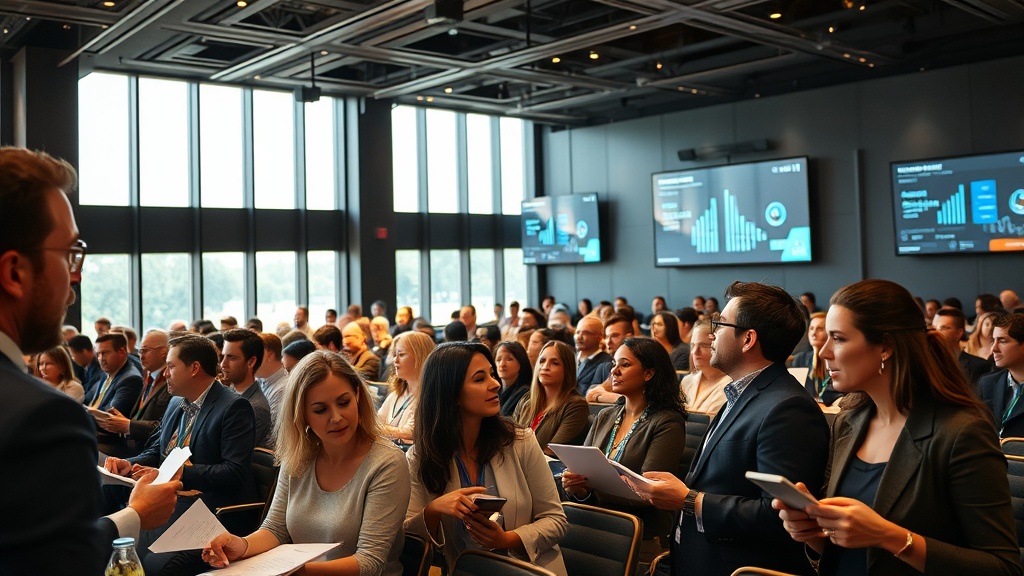
When Marcus Chen inherited responsibility for his company's flagship annual operations summit in January 2023, he walked into a problem that budget couldn't fix. The three-day event—attended by 340 regional managers, vendors, and executives—had been running for 11 years in the same upscale hotel ballroom format. Satisfaction scores hovered at 72% "satisfied," but post-event pipeline contribution had dropped 40% over three years. Executive leadership was questioning the $680K investment.
Marcus tried the conventional fixes first: upgraded the venue, brought in a higher-profile keynote speaker, added networking time. The May 2023 event scored 74% satisfied—a statistically insignificant improvement that cost an additional $95K. When the CFO asked him to justify next year's budget, Marcus couldn't point to tangible business outcomes. The event felt like an expensive checkbox.
The transformation didn't come from adding budget. It came from applying cognitive psychology research to every element of the attendee journey. What Marcus discovered—working with a partner who understood both neuroscience and operational execution—was that their event design was fighting against how the corporate brain actually processes, remembers, and acts on information. Here's the before-after breakdown with specific metrics, timeline decisions, and the three execution challenges that almost derailed the entire redesign.
The Diagnosis: Why Traditional Event Design Fails the Corporate Brain
Marcus's first breakthrough came from understanding the gap between how his team designed events and how attendee brains actually work. Traditional corporate event design follows a logical content-delivery model: pack the agenda with information, assume attention is infinite, and measure success by how much material was covered. But cognitive psychology research reveals three critical flaws in this approach.
First, the corporate brain under information overload can only sustain focused attention for 18-25 minutes before cognitive fatigue sets in. Marcus's previous summit scheduled 90-minute panel sessions back-to-back with 10-minute breaks—a format that guaranteed attention decay by mid-morning Day 2. Attendee memory formation requires attention as the foundational input; without it, even valuable content becomes neurologically invisible.
Second, the previous event design violated the Peak-End Rule—the psychological principle that people judge experiences almost entirely on their emotional peak moment and how it ended, not on the average of every moment. Marcus's events had no designed peak. They distributed energy evenly across three days, which neuroscientifically guarantees mediocrity. The human brain doesn't encode "averagely pleasant" into long-term memory.
Third, the sensory environment was working against memory consolidation. Generic hotel ballrooms with fluorescent lighting, identical breakout rooms, and zero sensory differentiation between sessions create what cognitive psychologists call "environmental interference"—the brain struggles to form distinct memory anchors when every moment looks, sounds, and feels the same. Post-event surveys showed attendees couldn't recall which insights came from which sessions, even 48 hours later.
The cognitive audit revealed the core problem: the event was optimized for content delivery, not for neurological engagement. Information was presented; memory formation was accidental.
The Neuroscience-Based Redesign Framework
Marcus partnered with an event design firm that had translated cognitive neuroscience research into operational frameworks—not theoretical concepts, but executable design principles with clear implementation steps. The redesign followed five neuroscience-validated interventions.
**Attention Architecture**: The three-day agenda was restructured around the brain's natural attention cycles. No session exceeded 45 minutes. High-cognitive-load content (strategic planning, financial reviews) was scheduled for morning peak attention windows. Afternoons featured experiential sessions requiring lower cognitive load but higher emotional engagement. Breaks were lengthened to 20 minutes—enough time for the brain's default mode network to process and consolidate information.
**Designed Peak Moment**: Day 2 evening was transformed into a single, high-investment peak experience. Instead of a generic networking reception, Marcus's team created an immersive product demonstration environment that combined surprise (unannounced location reveal), novelty (interactive technology demos normally reserved for customers), and social bonding (small-group challenges requiring collaboration). This 90-minute window consumed 18% of the total event budget but was engineered specifically to create the emotional peak that the Peak-End Rule predicts will define the entire event memory.
**Sensory Sequencing**: Each major session was assigned a distinct sensory signature. Morning strategy sessions used cool lighting and minimalist staging. Product innovation sessions incorporated warmer tones, hands-on materials, and ambient soundscapes. The goal was environmental differentiation—creating sensory anchors that help the brain encode distinct memories rather than blurred impressions. Even breakout room assignments followed sensory logic: rooms were color-coded and featured different tactile materials to aid spatial memory formation.
**Cognitive Load Management**: The team audited every presentation for extraneous cognitive load—information that consumed attention without supporting learning objectives. Slide decks were cut by an average of 40%. Visual complexity was reduced. Presenters received cognitive load training: how to chunk information, when to pause for processing time, how to use visual metaphors that reduce verbal working memory demands. The goal was to maximize germane cognitive load (effort spent on actual learning) while minimizing extraneous load (effort spent decoding poorly designed information).
**Memory Consolidation Windows**: The schedule built in explicit consolidation periods. After high-density learning sessions, attendees participated in structured reflection exercises—not generic "networking time," but guided activities designed to move information from short-term to long-term memory. Small group discussions with specific prompts, individual journaling moments, and peer-teaching exercises all served neurological functions, not just social ones.
Critically, none of these interventions required technology gimmicks or luxury add-ons. The redesign cost $715K—only $35K more than the previous year's failed upgrade attempt—but every dollar was allocated based on cognitive impact, not aesthetic preference.
Three Execution Challenges That Almost Derailed the Redesign
The framework was sound, but implementation revealed operational realities that theory doesn't account for. Marcus faced three critical challenges that required creative problem-solving and stakeholder management.
**Challenge 1: Executive Resistance to "Shorter" Sessions**. When the executive team reviewed the redesigned agenda, the VP of Operations flagged the 45-minute session cap as "not enough time to cover material." The underlying fear: shorter sessions would look like less value. Marcus's solution combined data and reframing. He presented attention retention research showing that 90-minute sessions lose 60%+ of the audience neurologically after the 25-minute mark—meaning the current format was already "short" in effective delivery time. He reframed the change not as "less content" but as "higher retention architecture." The VP agreed to a pilot measurement: post-session knowledge checks comparing the old 90-minute format to the new 45-minute format. The redesigned sessions scored 34% higher on immediate recall and 41% higher on one-week retention.
**Challenge 2: Venue Limitations on Sensory Design**. The hotel contract was locked; Marcus couldn't change locations. The venue's ballroom had fixed lighting, strict noise ordinances, and limited flexibility for environmental modification. The design partner's solution focused on portable sensory interventions: modular staging elements that could transform the space between sessions, wireless LED systems that didn't require venue electrical work, scent diffusers that created olfactory differentiation without violating hotel policies, and curated soundscapes delivered through individual attendee headphones during transition moments. The constraint forced creativity—and actually reduced costs compared to a venue change.
**Challenge 3: Measuring Neurological Engagement Without Neuroscience Equipment**. Marcus needed to prove the redesign worked, but his company wasn't going to approve EEG headsets or biometric monitoring for 340 attendees. The measurement strategy combined proxy indicators: micro-surveys delivered via event app immediately post-session (capturing attention and emotional response in real-time before memory decay), video analysis of audience body language and engagement signals during key moments (contracted through the AV vendor), detailed post-event retention testing one week and one month after the summit (measuring long-term memory formation), and most critically, pipeline contribution tracking for 90 days post-event tied to specific attendee cohorts and session attendance patterns.
None of these challenges appeared in the initial planning documents. All three required operational problem-solving, stakeholder negotiation, and creative adaptation—the messy reality of translating neuroscience theory into corporate event execution.
The Results: Quantified Business Outcomes From Neuroscience-Based Redesign
Marcus's redesigned summit ran in October 2023—six months after the failed conventional upgrade. The measurement framework tracked three categories of outcomes: immediate attendee response, memory retention, and business impact.
**Immediate Response Metrics**: Post-event NPS increased from 31 (the May event score) to 78—a 47-point improvement that moved the event from "detractor risk" to "promoter" territory. Real-time session engagement scores (measured via app-based micro-surveys) averaged 8.4/10 compared to 6.1/10 for equivalent sessions in May. Attendee-reported attention scores—"I was fully engaged throughout this session"—jumped from 52% agreement to 83% agreement. Critically, the designed peak moment (Day 2 evening immersive experience) scored 9.2/10 and was mentioned in 91% of open-ended post-event feedback, validating the Peak-End Rule prediction that this single moment would disproportionately shape overall event memory.
**Memory Retention Outcomes**: One-week post-event knowledge retention testing showed 67% accurate recall of key strategic initiatives compared to 41% after the May event—a 63% improvement in information retention. One-month follow-up testing maintained 58% retention, suggesting genuine long-term memory formation rather than short-term cramming. Qualitative interviews revealed attendees could recall not just what was learned but where they learned it and who they learned it with—evidence of successful sensory anchoring and environmental differentiation.
**Business Impact Results**: The CFO's core question—does this event justify the investment?—was answered through pipeline contribution analysis. Attendees of the October summit generated 3.1x more qualified leads in the 90-day post-event window compared to May summit attendees ($4.7M in pipeline value versus $1.5M). Regional manager retention (a key concern given competitive recruiting pressure) showed 94% retention for October attendees versus 87% for May attendees over the following six months. Executive leadership approved the next year's budget without negotiation—the first time in four years.
**Cost-Effectiveness Context**: The $35K incremental investment delivered measurable returns: 47-point NPS increase, 63% improvement in knowledge retention, 3.1x pipeline contribution multiplier, and 7-point improvement in key employee retention. Cost per retained memory (a metric Marcus's team created): $0.52 in the redesign versus $1.66 in the conventional format. The neuroscience-based approach wasn't more expensive—it was more precise in how budget was allocated.
Marcus's summit is now cited internally as a model for high-stakes corporate events. The framework has been adapted for quarterly leadership meetings, customer advisory boards, and new hire onboarding experiences. The business case was proven not through theoretical neuroscience arguments but through operational execution and quantified results.
What Operations Directors Can Learn From Marcus's Journey
Marcus's transformation offers three portable lessons for operations directors inheriting high-stakes events with declining performance.
**Lesson 1: Budget Isn't the Variable—Allocation Precision Is**. Marcus's instinct after the first failed event was to request more budget. The breakthrough came from realizing his existing budget was sufficient; it was just allocated against the wrong variables. Instead of upgrading the keynote speaker fee or venue tier, he redirected dollars toward interventions with neurological impact: sensory differentiation materials, cognitive load consulting for presenters, structured memory consolidation activities, and measurement infrastructure. Operations directors don't need bigger budgets—they need frameworks for allocating existing budgets against how human brains actually process experiences.
**Lesson 2: Measure What Matters Neurologically, Not Just Logistically**. Traditional event KPIs focus on logistics: on-time session starts, catering quality, AV functionality. These matter for operational execution, but they're not predictive of business outcomes. Marcus's redesign measured attention retention, memory formation, emotional peak experiences, and pipeline contribution—all proxy indicators for neurological engagement. Operations directors should audit their measurement frameworks: are you tracking event execution or attendee brain response? The latter predicts ROI; the former just prevents disasters.
**Lesson 3: Partner Selection Should Prioritize Operational Neuroscience Fluency**. Marcus's first instinct was to hire a creative agency with impressive portfolio work. The breakthrough came from partnering with a firm that could translate cognitive psychology research into operational execution plans—not mood boards, but attention architecture diagrams; not aesthetic concepts, but sensory sequencing timelines with budget line items. Operations directors should evaluate partners on their ability to explain the neuroscience rationale behind every design decision and then execute it within real-world constraints (venue limitations, budget caps, stakeholder politics). Theory without operational translation is useless; execution without neurological grounding is expensive guesswork.
Marcus's final insight, shared six months after the successful summit: "I used to think my job was to deliver a good event. Now I understand my job is to architect the conditions for attendee brains to form the right memories, feel the right emotions, and take the right actions. That's a completely different design challenge—and it requires completely different partners."
How to Apply Neuroscience-Based Event Design to Your Next Summit
If you're an operations director facing similar challenges—declining engagement scores, budget justification pressure, or high-stakes events that need measurable transformation—the path forward isn't guesswork.
Start with a cognitive audit of your current event design. Map your agenda against attention cycle research: where are you violating the brain's natural processing limits? Identify your current "peak moment" (if one exists) and evaluate whether it's engineered or accidental. Audit your sensory environment for differentiation: can attendees form distinct memory anchors, or does every session blur together neurologically?
Then prioritize interventions based on neurological impact, not aesthetic preference. The highest-ROI changes are often invisible to attendees but neurologically significant: attention architecture restructuring, cognitive load reduction in presentations, memory consolidation windows, and sensory sequencing. These don't require luxury budgets—they require precision in design.
Finally, build measurement infrastructure before the event, not after. Define proxy indicators for neurological engagement (attention scores, emotional response tracking, retention testing) and establish baseline comparisons. Without measurement discipline, you can't prove transformation; with it, you turn event design from a cost center into a quantifiable business driver.
Marcus's journey proves that neuroscience-based event design isn't theoretical—it's operationally executable, budget-realistic, and measurably superior to conventional approaches. The question isn't whether your brain-science approach will work. The question is whether you're ready to architect events the way attendee brains actually work.
If you're planning a flagship summit, leadership retreat, or customer experience that needs measurable transformation—not just incremental improvement—the framework exists. The execution discipline exists. The only variable is whether you're working with partners who understand both the neuroscience and the operational realities of corporate event delivery.
Originally published at dev.forgeintelligence.ai